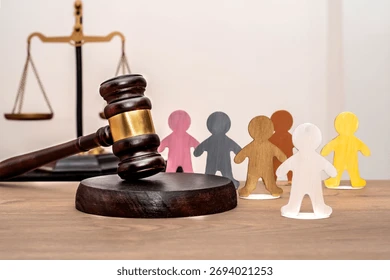
Law and Human Rights is an important field of study that focuses on legal systems, justice, rights, responsibilities, and equality in society. Law regulates human behavior by establishing rules and regulations that maintain order and protect individuals and communities. Human rights ensure that every person is treated with dignity, fairness, and respect regardless of background, gender, religion, or nationality. Law is the system of rules created and enforced by governments and legal institutions. It governs relationships between individuals, businesses, and the state. Laws cover areas such as criminal justice, civil rights, property ownership, contracts, family matters, and corporate regulations. Courts interpret and apply laws to resolve disputes and deliver justice. One of the key legal principles in international human rights protection is promoted by organizations such as United Nations. The United Nations works to maintain peace, promote human rights, and encourage cooperation between countries. It adopted the Universal Declaration of Human Rights (UDHR), which outlines fundamental rights that belong to all people worldwide. Human rights include the right to life, freedom of speech, education, healthcare, equality before the law, and freedom from discrimination. These rights protect individuals from abuse and injustice. Governments are responsible for protecting and respecting these rights through legislation and policy implementation. Legal systems ensure that violations of rights can be challenged in court. Criminal law is a major branch of law that deals with crimes and punishments. It defines illegal actions such as theft, fraud, assault, and corruption. Criminal courts determine whether a person accused of a crime is guilty and decide appropriate penalties. Criminal law helps maintain public safety and order in society. Civil law focuses on disputes between individuals or organizations. These disputes may involve contracts, property ownership, divorce, inheritance, or financial claims. Civil courts resolve conflicts by providing compensation or legal remedies rather than punishment. Constitutional law is another important area that defines the structure of government and the powers of different institutions. A constitution outlines the rights of citizens and limits the authority of government bodies. For example, the legal framework of Pakistan is based on its constitution, which guarantees fundamental rights and establishes governance structures. International law regulates relationships between countries. It includes treaties, agreements, and conventions that promote cooperation on issues such as trade, security, environmental protection, and human rights. International law plays a key role in maintaining peace and resolving global conflicts. Legal professionals such as lawyers, judges, legal advisors, and prosecutors play an essential role in the justice system. Lawyers represent clients in court, provide legal advice, and ensure fair trials. Judges interpret laws and make decisions based on evidence and legal principles. Studying law requires strong analytical skills, critical thinking, research ability, and communication skills. Human rights law has become increasingly important in addressing global challenges such as gender inequality, child labor, discrimination, and refugee protection. Legal institutions and advocacy groups work to raise awareness and protect vulnerable populations. Activists and legal experts often collaborate to promote justice and accountability. Technology has also influenced law and legal systems. Digital evidence, cybersecurity laws, online privacy regulations, and electronic contracts are becoming more common. Courts and legal institutions use digital case management systems to improve efficiency and transparency. However, law and human rights face challenges such as corruption, unequal access to justice, legal discrimination, and enforcement difficulties. Strong institutions, independent courts, and public awareness are necessary to ensure fairness and accountability.
In conclusion, Law and Human Rights is a vital field that protects justice, equality, and freedom in society. It establishes rules that maintain order while safeguarding individual rights. By understanding legal systems and human rights principles, individuals become responsible citizens who contribute to fair governance and social stability. This field plays a crucial role in building peaceful, democratic, and inclusive communities worldwide.